
Blog
Food Safety Supervisor for Hospitals & Health Settings
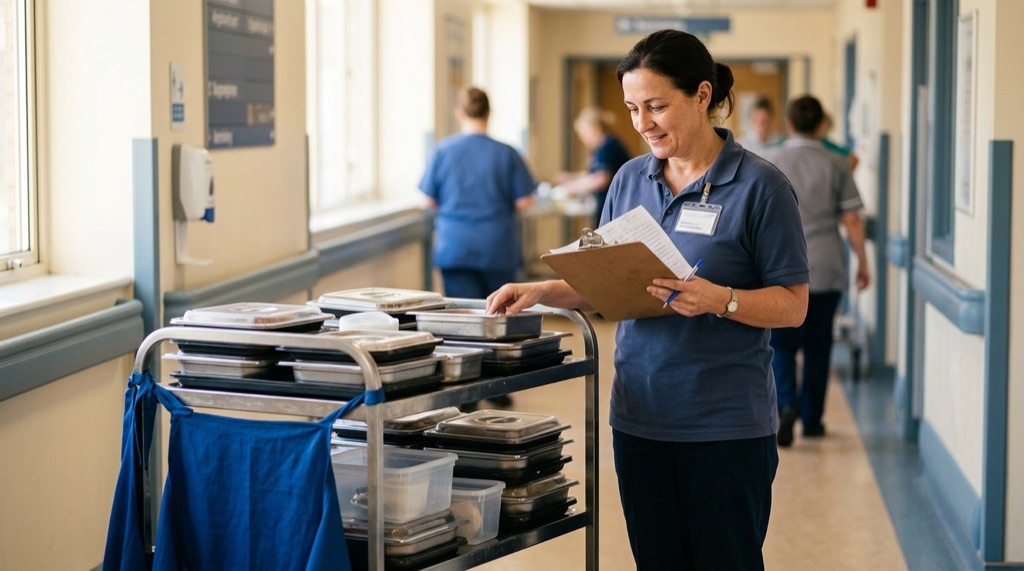
A hospital is rarely one food business. There is usually a ward kitchen sending meal trays to patients whose immune systems make foodborne illness genuinely dangerous, and separately there is often a public café, coffee cart or retail food outlet in the lobby serving visitors and staff. Those two operations can be regulated completely differently — and, this is the part most guides skip, they can need entirely different training. We went state by state through official government sources to work out which Food Safety Supervisor units a hospital actually needs. The honest answer is that it depends on which state you're in, and on which part of the hospital you're asking about. Get it wrong and you can end up with a certificate that doesn't satisfy your regulator.
Do hospitals need a Food Safety Supervisor?
Yes — hospitals are Category 1 businesses under Food Standard 3.2.2A because they serve food to vulnerable people, and every state and territory requires Category 1 businesses to appoint a trained Food Safety Supervisor. Food Standard 3.2.2A has applied nationally since 8 December 2023, and it sorts food businesses by the risk of what they actually do, not by their industry label. Category 1 covers businesses serving unpackaged, potentially hazardous food to vulnerable groups — hospitals, aged care and childcare are the standard examples used across state guidance. What Standard 3.2.2A does not settle on its own is which units of competency satisfy that requirement — and that is where the states genuinely diverge. Not sure whether your specific facility is caught? Our free eligibility checker walks through it in about a minute.
Victoria: a hospital kitchen and a hospital café need different units
In Victoria, a hospital's Food Safety Supervisor is required to hold the HLTFSE001, HLTFSE005 and HLTFSE007 units — not the SITXFSA005 and SITXFSA006 units that cover a restaurant, café or hotel. This comes directly from the Victorian Department of Health's official guide, Food safety supervisors and training, which sets out a table of food sectors and their minimum competency standard: 'Hospitality' businesses (restaurants, cafés, hotels) use SITXFSA units, while the 'Health' sector — its own example is 'businesses such as hospitals' — uses HLTFSE001, HLTFSE005 and HLTFSE007. 'Community Services' businesses (childcare centres, nursing homes, hostels, Meals-on-Wheels) use the same three Health units.
That single distinction matters more than it looks. It means our SITXFSA005/SITXFSA006 course — the same nationally recognised units we sell for $129 to cafés, pubs and caterers — is genuinely the right qualification for a Victorian hospital's public café, kiosk or retail food counter, because that operation is classified under Hospitality or Retail, not Health. But it is not the correct unit set for whoever supervises food safety on the wards. Victoria's local councils classify each premises, so if you're unsure which side of that line your hospital's kitchen sits on, confirm it with your council's environmental health officer before you enrol anyone. See our Victorian Food Safety Supervisor page for the state's broader rules, or Victorian aged care requirements — aged care sits under the same Health-sector classification as hospitals.
Western Australia: either pathway is accepted
Western Australia is the one state we checked where the regulator's own guideline does not lock a hospital into one unit set. The WA Department of Health's Food Act 2008 Regulatory Guideline No. 7 lists four accepted Food Safety Supervisor pathways joined by 'or': the SITSS00069 skill set (SITXFSA005 and SITXFSA006 — our course), the older SITSS00051 skill set, the retail unit SIRRFSA001, or the HLTSS00061 skill set (HLTFSE001, HLTFSE005 and HLTFSE007), described as being for community services and health industries. The guideline itself doesn't mandate that a hospital use the health pathway specifically, unlike Victoria's table. That said, some WA training providers still market the HLTFSE units specifically at the care sector, so it's worth a quick check with your local council's environmental health officer before you commit a whole team to one course.
NSW: most hospitals sit outside the Food Safety Supervisor system entirely
In New South Wales, a hospital providing meals to patients is usually licensed directly by the NSW Food Authority under its Vulnerable Persons Food Safety Scheme — and that licence exempts it from the standard Food Safety Supervisor requirement altogether, with no SITXFSA or HLTFSE unit required. The NSW Food Authority licenses roughly 1,200 businesses under this scheme, including hospitals, aged care facilities and Meals-on-Wheels providers, and its own guidance states plainly that there are no formal food safety qualifications required for food handlers in vulnerable persons facilities — only that each food handler has skills and knowledge appropriate to their role.
Separately, the NSW Food Authority's standard FSS page lists businesses licensed with the NSW Food Authority among the exemptions from the ordinary Food Safety Supervisor rule — and where the standard rule does apply, it only recognises two pathways: the hospitality units SITXFSA005 and SITXFSA006, or the retail unit SIRRFSA001. There is no HLTFSE option in NSW's standard scheme at all. In practice, this means a hospital's separately registered public café or retail kiosk — not covered by the vulnerable-persons licence — is an ordinary hospitality or retail food business, and it does need a Food Safety Supervisor holding SITXFSA005 and SITXFSA006, plus the state's own NSW Food Safety Supervisor certificate on top (a $35 add-on, $164 all-in). Our NSW Food Safety Supervisor page covers that certificate and the renewal cycle in full.
What we verified, state by state
The pattern above — hospitality units for a café, different units for the ward kitchen — is not confirmed the same way everywhere, so treat the table below as what we could confirm from an official source today, not a universal rule.
| State/territory | What we verified about a hospital's Food Safety Supervisor units | Confidence |
|---|---|---|
| NSW | Hospitals licensed under the Vulnerable Persons Food Safety Scheme are exempt from the standard FSS requirement entirely. Where the standard FSS does apply (e.g. a hospital's public café), only SITXFSA005/006 or SIRRFSA001 are accepted — no HLTFSE pathway exists in the NSW scheme. | Verified directly against NSW Food Authority pages |
| VIC | Hospitals sit in the 'Health' sector and require HLTFSE001, HLTFSE005 and HLTFSE007 — not SITXFSA. A hospital's café or retail counter uses the Hospitality or Retail units instead. | Verified directly against the Victorian Department of Health's official guide |
| WA | Either pathway is accepted: SITXFSA005/006, SIRRFSA001, or the HLTFSE units, per the state's own regulatory guideline — no sector lock stated in the guideline itself. | Verified directly against WA Department of Health Regulatory Guideline No. 7 |
| QLD | Guidance commonly separates a health/community pathway (HLTFSE units) from a hospitality pathway (SITXFSA), consistent with the pattern in the states above. | Corroborated by secondary sources — confirm with Queensland Health before enrolling staff |
| SA | SA Health publishes a health and community skill set (HLTSS00061) built from the HLTFSE units, alongside separate retail and hospitality pathways. | Corroborated by secondary sources — confirm with SA Health before enrolling staff |
| TAS / ACT / NT | Not independently verified for this article. | Check with your state or territory health department before choosing a course |
If your hospital sits in a state we've marked as corroborated rather than verified, or in TAS, ACT or the NT, contact us before you enrol your team — we'll help you confirm the right units with your regulator rather than sell you a certificate that might not satisfy them.
Where our $129 course fits inside a hospital — and where it doesn't
Melbourne Tech Institute's course delivers SITXFSA005 and SITXFSA006 for $129, with your certificate issued within one business day and a money-back guarantee — and in every state we checked, that's the right qualification for a hospital's public café, kiosk, retail food outlet or external catering arm. In NSW and WA it can also be the right choice for the ward kitchen itself, subject to the NSW licensing position above. In Victoria, and most likely Queensland and South Australia, the ward kitchen's supervisor needs the HLTFSE units instead — and we'd rather tell you that plainly than sell you a certificate for the wrong role.
If your team needs a certificate faster than the standard one business day — a new supervisor starting Monday, an audit already booked — the Express add-on is $19.95 and moves you to the front of the marking queue for a certificate within six business hours, counted from when both your assessment and your observer's report have landed. It's the same course either way: SITXFSA005 and SITXFSA006, delivered by Melbourne Tech Institute, RTO #45799, and backed by our money-back guarantee. See our units page for exactly what's covered, or what it costs if you're budgeting for a whole team.
Get your hospital's food service team covered
The riskiest gap in a hospital is rarely the ward kitchen — staff there usually know the rules cold. It's the café or kiosk nobody thought of as a separate food business, run under its own registration with its own Food Safety Supervisor obligation. If that's the operation you're responsible for, enrol online, finish in a few hours, and have your certificate within one business day.
Does every hospital in Australia need a Food Safety Supervisor?
Most do, because hospitals are Category 1 businesses under Food Standard 3.2.2A. The exception we could verify is New South Wales, where a hospital licensed under the NSW Food Authority's Vulnerable Persons Food Safety Scheme is exempt from the standard Food Safety Supervisor requirement altogether — though its food handlers still need appropriate skills and knowledge, and any separately registered café or kiosk on site still needs its own supervisor.
What's the difference between the SITXFSA units and the HLTFSE units?
SITXFSA005 and SITXFSA006 are the hospitality units — the ones this course delivers, and the ones used for restaurants, cafés, hotels and, in some states, retail food outlets. HLTFSE001, HLTFSE005 and HLTFSE007 are a separate set built for the health and community sector, covering similar core food safety topics but assessed against a health-setting context. In Victoria, and most likely Queensland and South Australia, a hospital's ward kitchen needs the HLTFSE units specifically; in Western Australia, either set is accepted.
Does Melbourne Tech Institute's course cover a hospital's ward kitchen?
It depends on your state. Our course delivers SITXFSA005 and SITXFSA006, which is the correct qualification for a hospital's ward kitchen in NSW (where the standard FSS applies) and in Western Australia. In Victoria, the ward kitchen's supervisor is required to hold the HLTFSE units instead, and the same is likely true in Queensland and South Australia based on the guidance we found, though we'd recommend confirming with your state health department before enrolling. If you're not sure which applies to your facility, contact us and we'll help you check before you pay for the wrong course.
My hospital has a public café — is that covered separately from the ward kitchen?
Generally, yes. A hospital café, kiosk or retail food outlet open to visitors and staff is typically its own food business, registered separately from the vulnerable-persons meal service on the wards, and it needs its own appointed Food Safety Supervisor. In every state we checked, that role is satisfied by the SITXFSA005/SITXFSA006 units — the course we sell — because a café is classified under the Hospitality or Retail sector, not Health. In NSW it also needs the state's own NSW Food Safety Supervisor certificate on top.
We're in NSW and licensed under the Vulnerable Persons Food Safety Scheme — do we need anything at all?
The NSW Food Authority's own guidance for vulnerable persons facilities says there are no formal food safety qualifications required for food handlers — but every food handler and the person in control of the food business still needs food safety skills and knowledge appropriate to their role, and the facility must meet food standards and prepare for regular audits under its licence. That's a lower bar than a formal Food Safety Supervisor certificate, but it isn't nothing — check the current requirements with the NSW Food Authority directly, since licence conditions can be updated.
How much does the course cost and how fast is the certificate?
$129 for the nationally recognised SITXFSA005 and SITXFSA006 units, with your certificate issued within one business day of your assessment and observer report both landing, backed by a money-back guarantee. NSW adds $35 for the state's own certificate ($164 all-in), and Express marking is available for $19.95 if you need a certificate within six business hours instead.
Related guides
Get your Food Safety Supervisor certificate
Nationally recognised · 100% online · certificate within one business day.
View the course — $129 →